Insulating our Victorian living room part 2
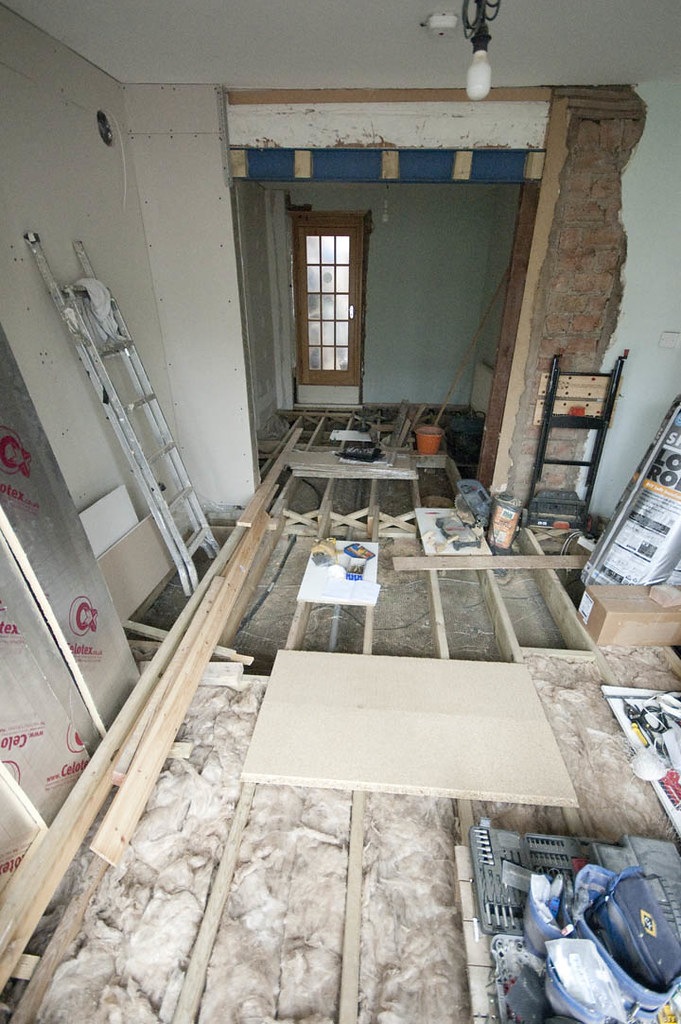
We live in an end-of-terrace Victorian house, built around 1905. I’ve spent the last few years insulating our living room. This blog post is the second in a two-part story. By the end of the first part of the story, our living room looked like this:
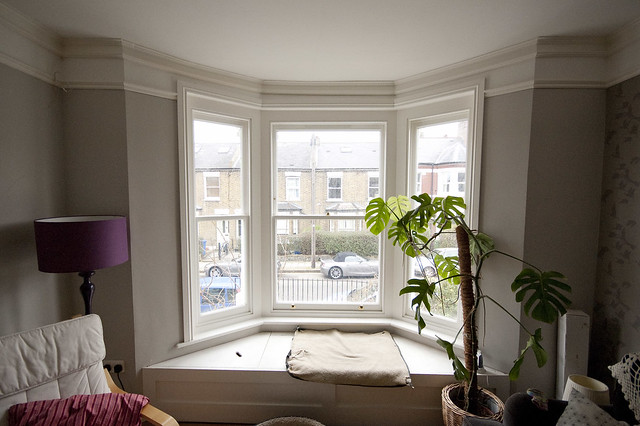
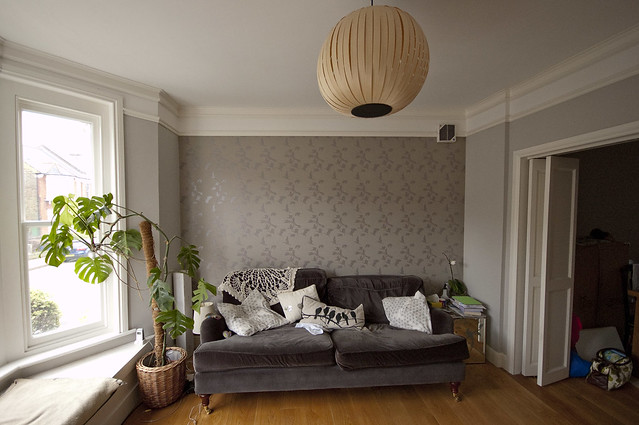
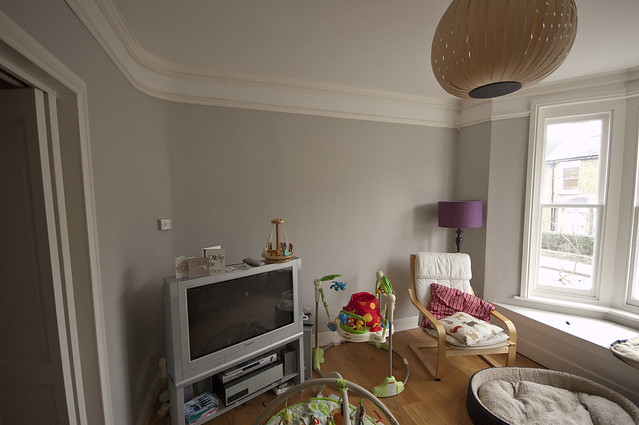
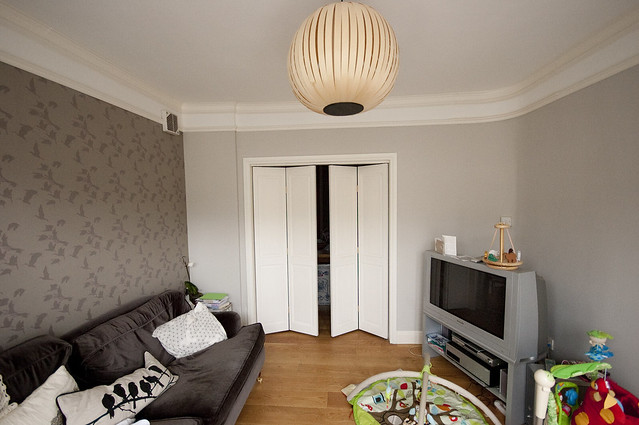
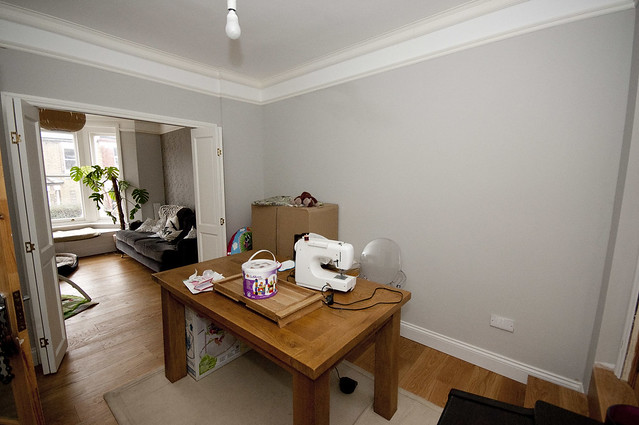
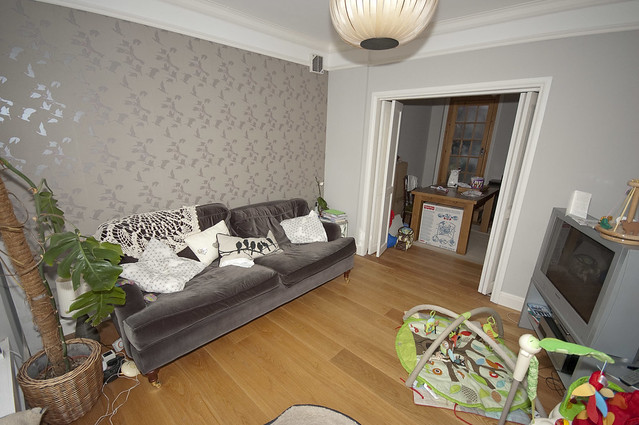
I’m pleased to say that our living room now looks like this:
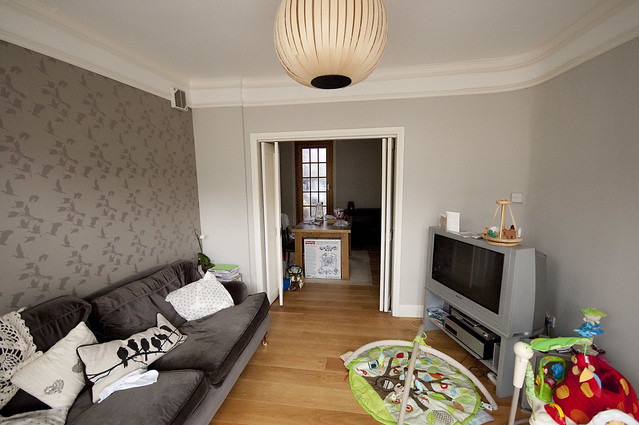
One big design change since my last blog is that we decided to install wet underfloor heating ourselves.
So, let’s start the story…
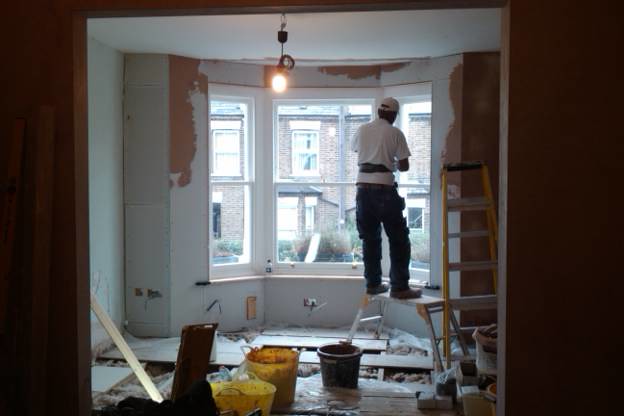
First, we had some gorgeous new double-glazed wooden sash windows installed by Draught Busters Ltd. Draught Busters built the frames and installed the windows and we used a 24mm double glazing unit supplied by UA Glass with a center-pane U-Value of 1.1 (my double glazing notes are here). The insulation around the windows took me quite a while to complete:
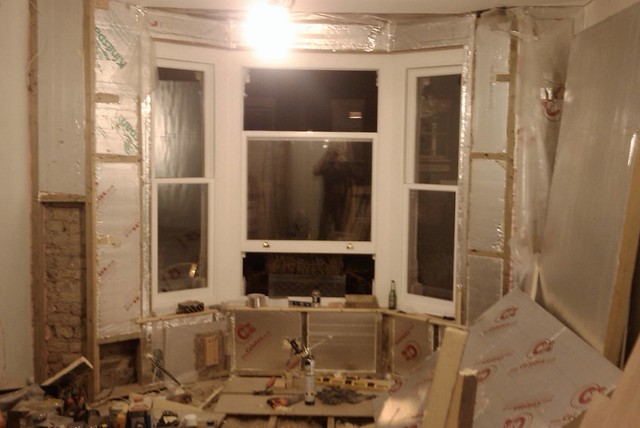
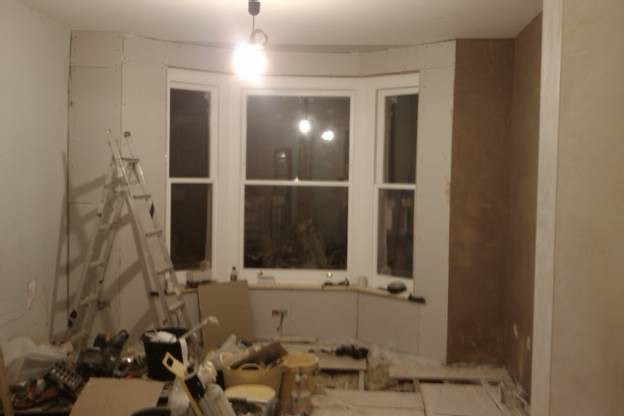
My original plan was for me to fill the gaps between the plaster board sheets using dry wall mud but time was running short so we asked an excellent local plaster to skim the plasterboard for us. I’m glad we did. Good professionals work so much faster!
The underfloor heating
We decided to install underfloor heating for several reasons:
- radiators are ugly
- UFH is apparently more efficient than radiators
- UFH apparently heats a room more comfortably because the room is heated evenly
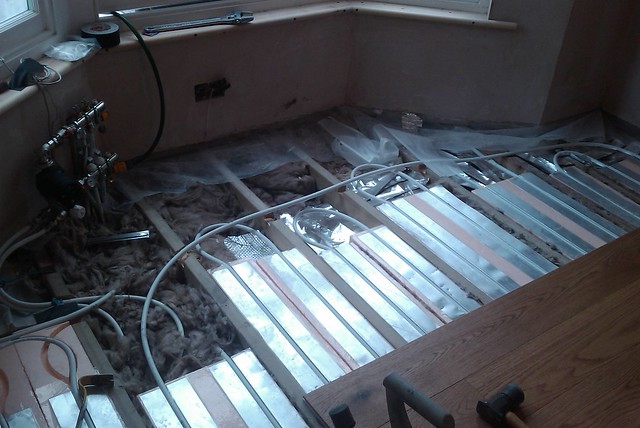
The “standard” way to install UFH in suspended timber floors is to fill the gap between the joists with a dry mix of sand and cement, through which the UFH pipes run. This has the advantage of providing a large thermal mass and of being a simple way of spreading the heat from the pipes across the floor area. However, I didn’t want to go this route because I wanted the heating to be as responsive as possible.
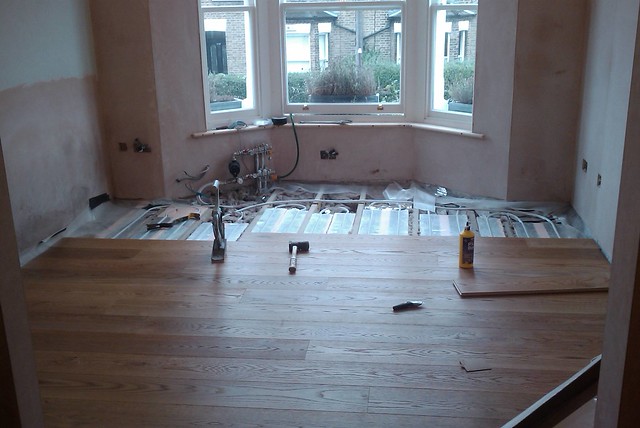
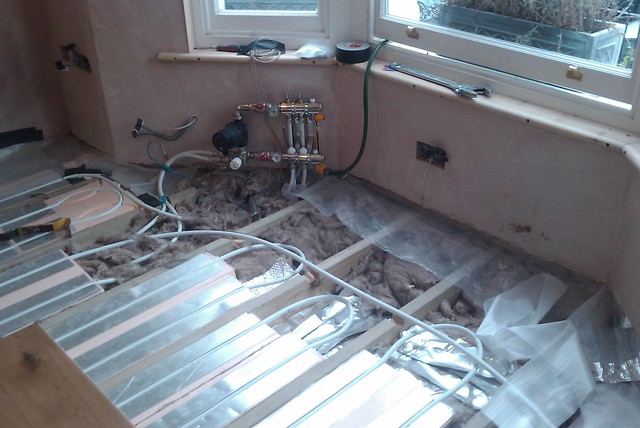
We considered using standard “aluminium heat spreaders” but decided to use a product made by Wavin. This product consists of a 50mm thick foam insulation board with an aluminium heat spreader built into the insulation and a thin plastic sheet over the heat spreader. The thin plastic sheet prevents the wooden floor boards scraping noisily against the heat spreader.
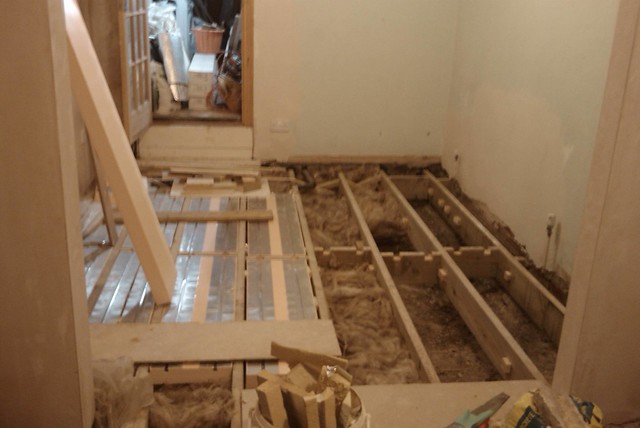
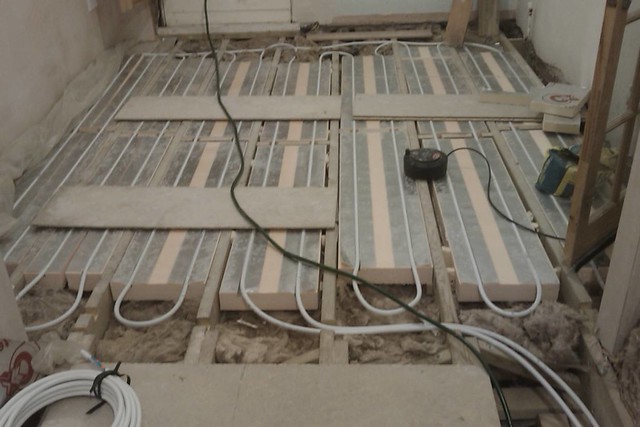
I’ve got to be honest, I would struggle to recommend Wavin’s UFH service. The product is fine, although it’s seriously over priced. The real problem was that it took hours of phone calls to buy the products. Wavin force you to use their “design service”. You send them the layout of your floor, including the positioning of the joists and Wavin calculate exactly which boards you need. Needless to say, this is a rather simple calculation for a floor as small as ours so I would have been far happier specifying the order myself. But no; Wavin force you to use their design service, and charge you for it. And then, the icing on the cake, was that they totally screwed up our order and sent the wrong bits! To be fair, they did send the correct bits 24 hours after I phoned up to notify them of their error, but they didn’t collect the incorrect bits.
If we were to install UFH into a suspended timber floor again, I think we’d just use normal aluminium heat spreaders. They’re cheap, very easy to install and don’t seem to have any noise issues (which was the main reason I went with Wavin’s solution).
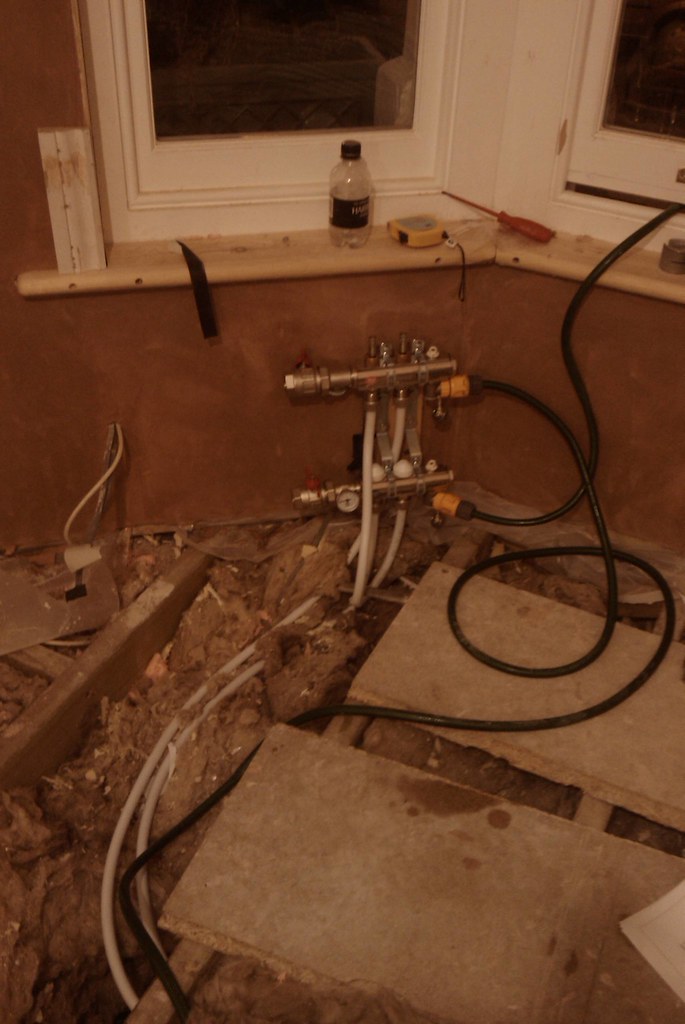
We bought the pipe and manifold from an on-line seller, UFH1. Great price, great service. After the manifold and pump arrived, I realised the pump used up to 50 watts. I phoned UFH1 and they kindly agreed to replace the standard pump for a posh Grundfos Alpha 2 pump, which only draws 5 watts while running our UFH. This pump is pretty expensive (I think it was about £150 back in mid-2010) and didn’t come with the proprietary power cable, which had to be bought for a further £50 which felt obscenely expensive. The pump is silent and is very efficient. Hopefully the prices of efficient pumps will come down soon. A quick google at the time of writing (Jan 2012) suggests that the prices have already dropped: the Alpha 2 appears to be available for £100 now.
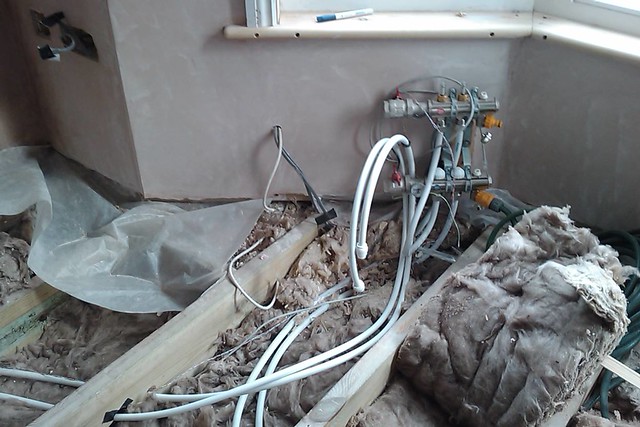
Here’s me pressure-testing the UFH manifold and piping prior to the floor being installed:
The floor boards
We purchased our floor boards from The Solid Wood Flooring Company after seeing samples at a show room in central London. The boards we purchased are engineered timber floor boards: 6mm of solid wood on top with a layer of ply underneath. They work with UFH but the wood must not get hotter than 27 degrees C.
I was originally planning to lay the floor myself but time was running short so a friend recommended an excellent carpenter who did a great job. He secret-nailed the boards and glued the tongue and grooves to minimise movement noise.
Decorating
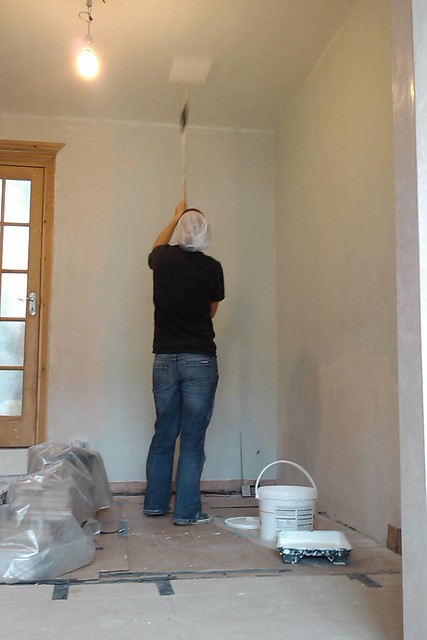
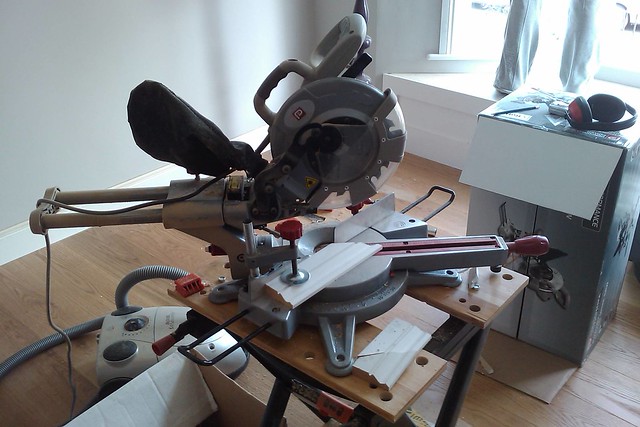
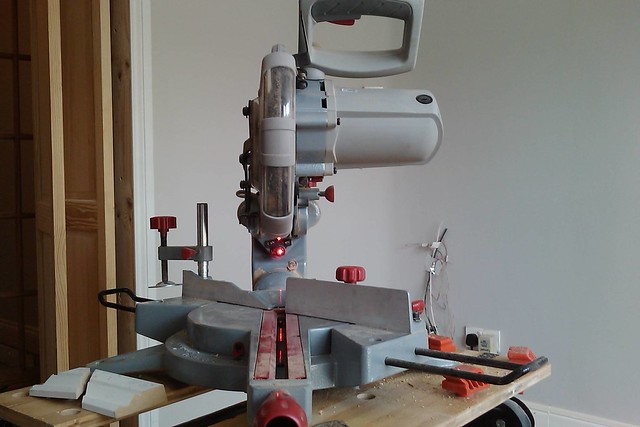
I became rather busy with work towards the end of the project so my gorgeous wife did a lot of the decorating, including installing the architrave, skirting boards and cornicing. She found an excellent, flexible type of skirting, architrave, picture rail and cornicing which worked well for the curved wall called “Orac flexible coving”. She also, rather amazingly, put up the wall paper on her own.
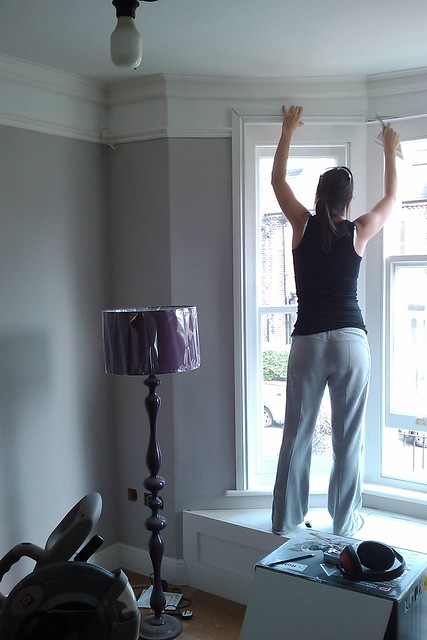
Ginnie’s new toy:
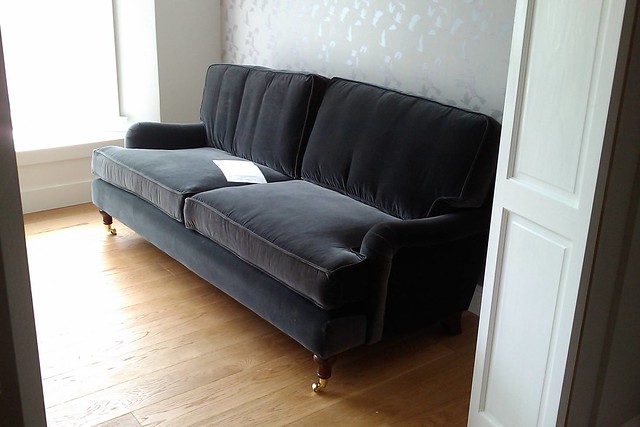
The sofa immediately after it was delivered:
The finished room

Performance & comfort
I have to say that we’re extrememly pleased with the finished product. The flooring is gorgeous; Ginnie’s work with the decorating is brilliant and the underfloor heating is great. It’s such a pleasure to be able to sit on the floor and play with my young daughter and dog whilst having a nice warm bottom! Our golden retriever sometimes leaves the room to go and sit somewhere cooler but not always. Prior to the refurb, the walls would get so cold that, whilst sat in the sofa, you could easily feel cold air falling onto your head and shoulders from the cold wall. No more!
The room is really very snug. At present, we’re having a cold snap here in the UK: the external air temperature gets down to about minus three at night and just above freezing during the day. Yet, every morning, the living room is at a snug 18 degrees C even though it hasn’t been heated since about 10pm the night before.
Under floor heating
The underfloor heating does take about an hour to warm up but that’s fine. And we’re still figuring out the best way to automatically keep the floor temperature within the safe limits for the wood. We do have a thermostatic valve on the UFH manifold but, of course, its only source of cold water is the return from the UFH. So I think I need to keep the flow rate round the UFH as low as possible so the return temperature is sufficiently cool to mean that the TMV can automatically limit the flow temp. Plus I need to install a room thermostat.
MVHR
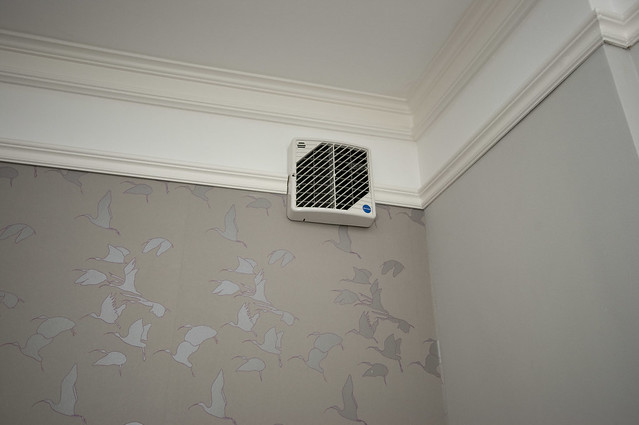
One big mistake was installing the mechanical ventilator with heat recovery in the living room (a Vent-Axia Lo-Carbon HR25 Solo Plus). The worst thing about it is that it’s very noisy if there’s any wind outside. And it’s a long way from silent when it’s running and there’s no wind. We also installed a MVHR in our bathroom (a VentAxia Lo-Carbon Tempra) and it doesn’t suffer from wind noise at all. To be honest, I think I’ll remove the MVHR in the living room. It doesn’t fit with the style of the room, and if it’s windy outside then the MVHR is noisy and draughty.
So, in summary, the MVHR in the livingroom is worse than useless. But the MVHR in the bathroom seems to work well. One problem we have is that we have a sloping roof in the bathroom so, whilst the MVHR is installed at the top of the external wall, that is about a meter below the highest point in the bathroom. So if we have a long shower then the MVHR fails to empty the bathroom of steam.
1-wire sensors
You may remember that I installed lots of 1-wire sensors throughout the building fabric. I haven’t yet gotten round to connecting a data logger to these sensors but I plan to do so.
Conclusion
Overall, my wife and I are very happy with our living room. We honestly haven’t noticed the reduction in floor area at all. It’s lovely to have a cosy room.
Let me know in the comments below if you have any questions and I’ll do my best to answer them!